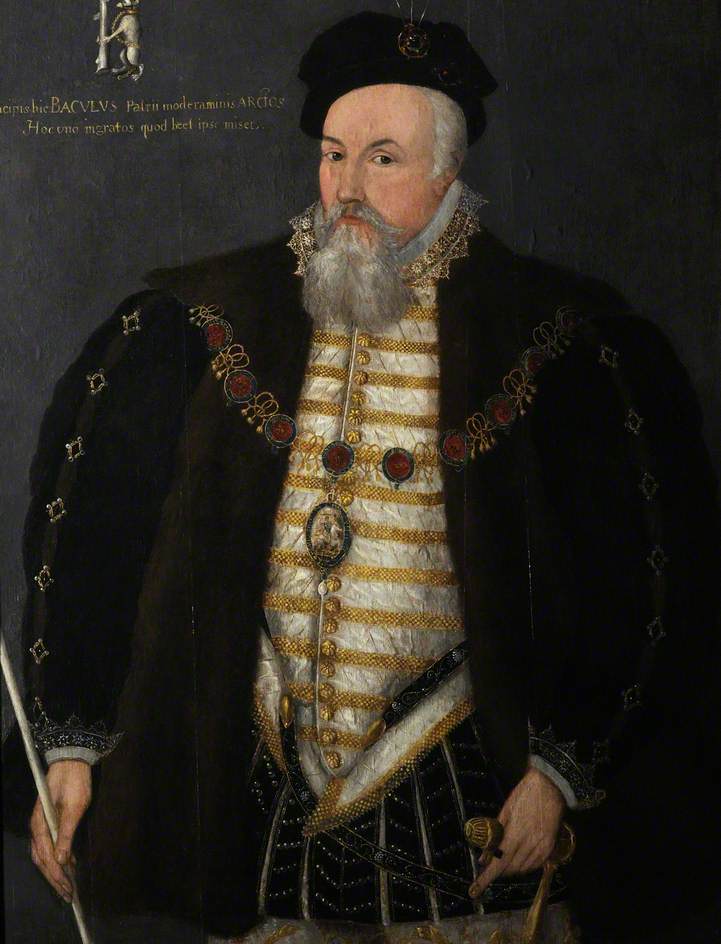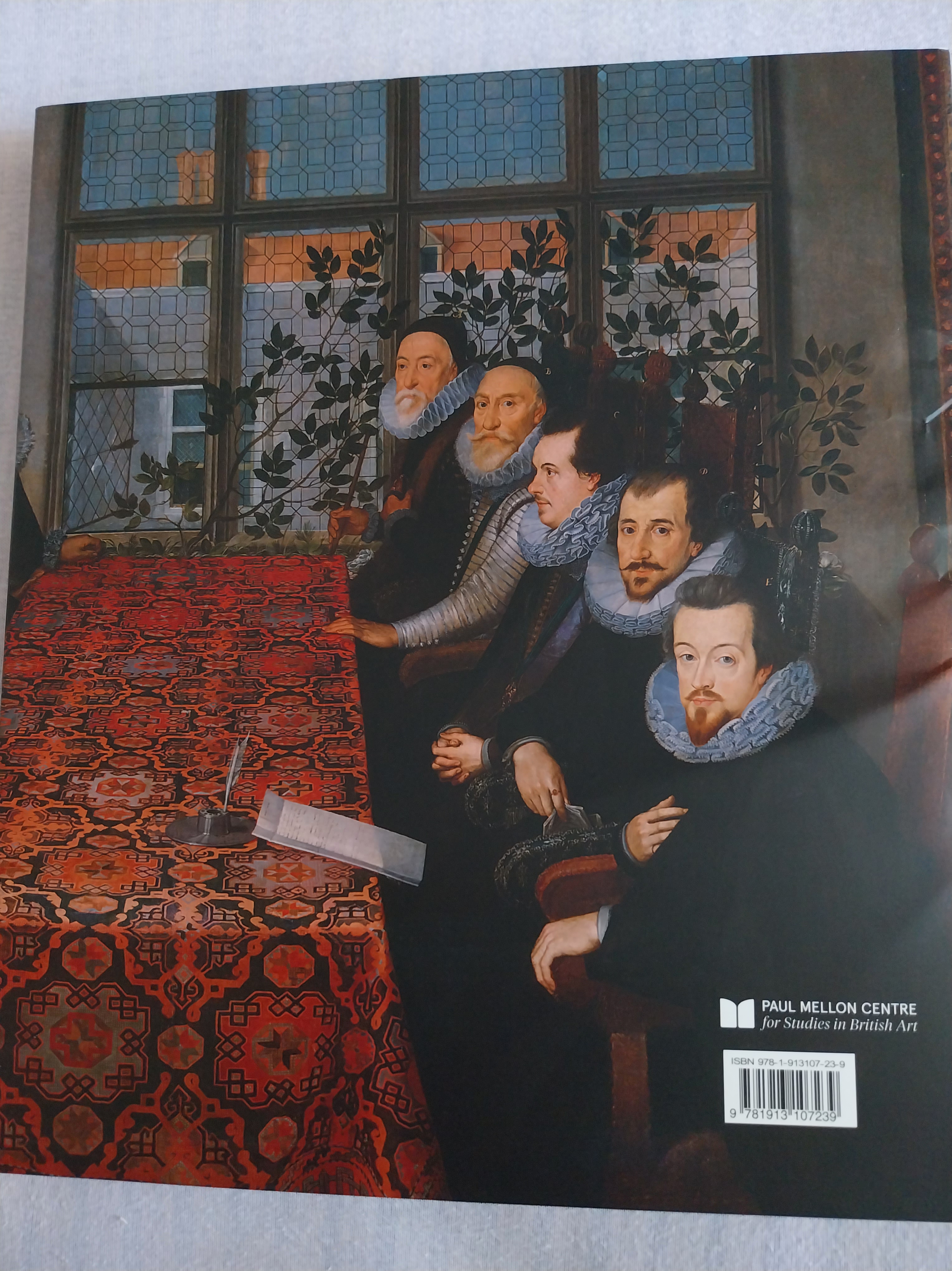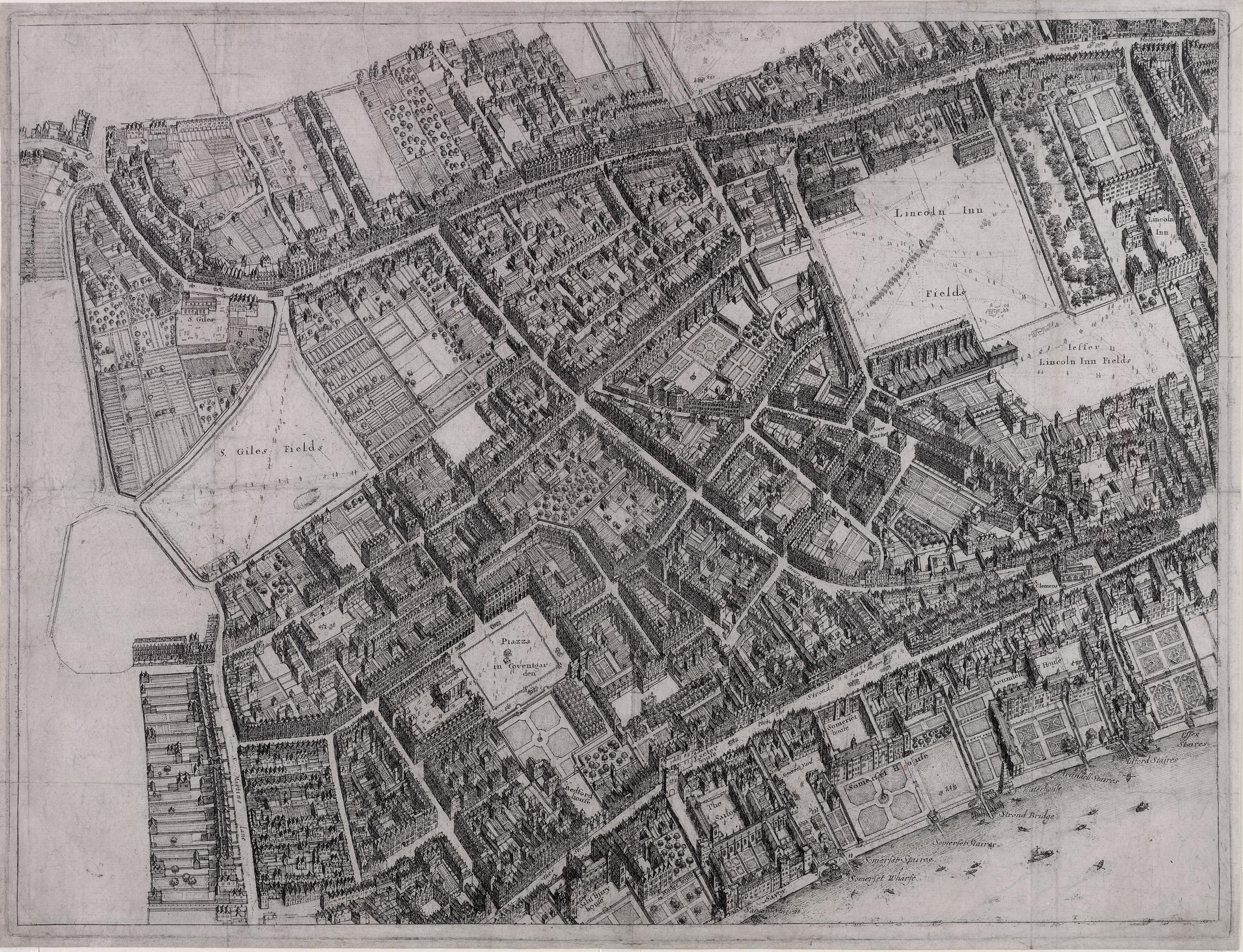
Robert Dudley The Ladies’ Man?

Robert Dudley, the ladies’ man? “Aliquando mulierosus, demum supra modum uxorius”, the historian William Camden described him – “much given to women and, finally, a good husband in excess”.1 He certainly always married for love: Amy Robsart on 4 June 1550, three weeks before his 18th birthday; then Lettice Knollys on 21 September 1578, behind the queen’s back. In between came and went Lady Douglas Sheffield, who later claimed to have been his wife too; if so, it was again a love match. It seems, Robert Dudley loved the ladies and the ladies him. Only from the 1580s, however, his enemies and detractors, in pamphlets and libels, invested the earl with a monstrous sexual appetite. As scholars have explained with reference to Leicester, this was a literary topos:

Every late 16th and early 17th-century writer knew in minute detail about the way favourites invariably managed to displace a prince’s real well-wishers, and by what sinful manoeuvres they clung on to their power, and how this exposed the commonwealth to tyranny and ruin … According to this extensive literature, favourites are creatures entirely of surfaces, attracting royal attention by their suspiciously new and fashionable clothes and by trivial accomplishments such as dancing; they are sexually unscrupulous and voracious, sleeping their way to the top and holding the monarch in erotic thrall … On paper, … even if not in life, a favourite must be a tireless and uninhibited sexual athlete.2

And so it happened that in a scurrilous pamphlet, written after Leicester’s death, the deceased earl is trying to get past St. Peter into heaven; thoroughly examined in the process, he fails to pass the test because of his many crimes, but especially because of his insatiable lust:

St. Peter then perceiving his own error, namely that his Dudleyship’s other offences were so heinous and so many that he had forgotten to examine him of his lechery, wherefore he began to examine him anew as well of his feats of arms done in his youth in his Lady Amy’s time and in his widowhood with divers ladies which shall be nameless because they are yet living and may amend, as also of his venerous acts done in his Lady Lettice’s time. Not forgotten his fowling piece in England nor the straight bodied laundresses in the red petticoat during his abode in Flanders beyond the seas, of all the which Dudley denied not one point, hoping that St. Peter because of his bald head had been a goodfellow in times past as well as he himself. But to proceed, St. Peter said unto him, have you repented also of this your lechery as you say you have done of your other faults? No, in very truth, said Robin, for it was so sweet and I accustomed to it even from my youth, that I held it no sin, and therefore could never repent me of it neither in youth nor age.3

In fact, there is very little evidence for Robert Dudley’s supposed womanizing. Until Elizabeth’s accession at leat he seems to have been a good husband, and his wife clearly loved him. His new job as Master of the Horse made him “the only man in England officially allowed to touch the Queen”,4 and Elizabeth expected his constant companionship. On the emotional level he became “practically a surrogate husband” to her, and after Amy’s death “his widower status meant that there was now no other woman competing for his attention”.5

Robert Dudley in Elizabeth I's coronation procession, behind her on horseback, leading the "palfrey of honour". As Master of the Horse he was the physically closest male to queen.

Robert Dudley in Elizabeth I’s coronation procession, behind her on horseback, leading the “palfrey of honour”. As Master of the Horse he was the physically closest male to the queen.

Clearly, having affairs with the ladies of the court under the queen’s nose would have been very impractical. There was, however, Helen Andrews. She was a London prostitute, indicted by the wardmote inquest of Cheapside, and Lord Robert Dudley intervened in her favour.6 It was quite normal for great men to help even humble suitors, but as he seems not to have done anything like this in similar cases, it is tempting to assume a personal interest. If so, this little incident is touching enough. – Other courtiers, like his own brother Ambrose, Earl of Warwick, appear in less romantic contexts: The Puritan earl’s livery was worn by a Holborn brothel keeper, and in the Earl of Worcester’s palace on the Strand the authorities closed down another facility (furious at this interference with his business, Worcester sued the civic culprits in the Court of King’s Bench).

The 1560s passed, Robert Dudley hoping to marry Elizabeth herself, and not just for power but for love as well. To this end he also obstructed as best he could any chances he had to gain the hand of Mary Queen of Scots. Finally, about 1570, he became involved with Lady Douglas Sheffield, this being “the first liaison he is known to have conducted since the death of his wife”.7 A few years before, in May 1567, his trusted political friend Sir Nicholas Throckmorton had added a cryptic comment to a letter between colleagues: “This night a fair lady lodges in your bed.”9 – Sadly, there is no clue who, if real, this lady might have been.

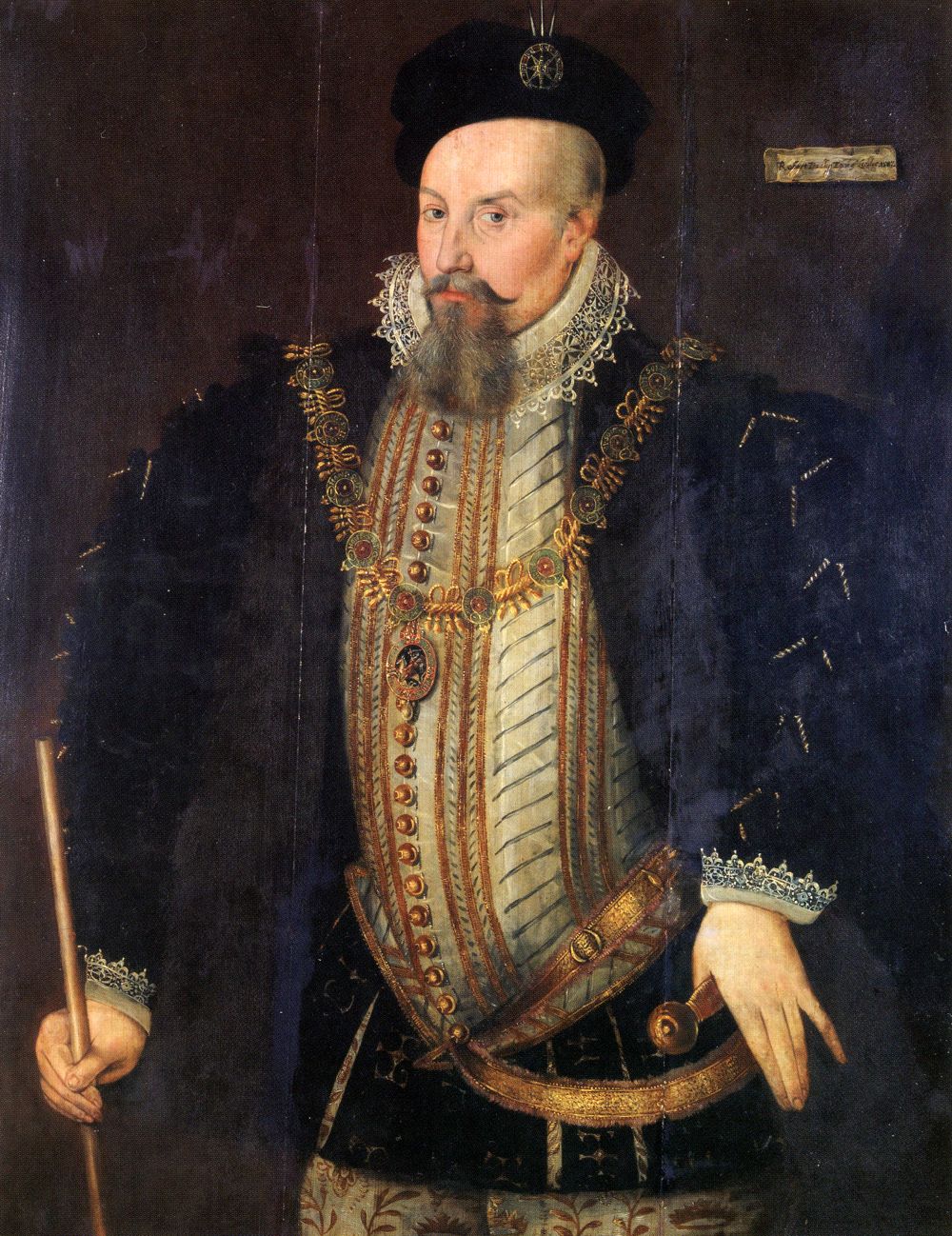
Robert Dudley by Nicholas Hilliard, c.1573, a time when he was pursued by two sisters "far in love with him"

Robert Dudley by Nicholas Hilliard, c.1573, a time when he was pursued by two sisters “very far in love with him”

In May 1573 Gilbert Talbot wrote his father, the Earl of Shrewsbury, the latest news about the queen’s favourite:

My Lord Leicester is very much with her majesty and she shows the same great affection to him that she was wont. Of late he has endeavoured to please her more than heretofore. There are two sisters now in the court that are very far in love with him, as they have long been; my Lady Sheffield and Frances Howard. They (of like striving who shall love him better) are at great wars together and the queen thinketh not well of them, and not the better of him. By this means there are spies over him.8

To escape this sort of surveillance, in 1578, the Earl of Leicester secretly married Lettice, the widowed Countess of Essex – to the queen’s extreme anger, when it was told her. Though he suffered both socially and emotionally from Elizabeth’s unrelenting hatred of his wife, he had finally acquired domestic happiness and a family. In late 1585 he went to the Netherlands as the commander-in-chief of the Anglo-Dutch forces, having to leave his countess behind. He started the venture full of enthusiasm (and some ill forebodings), but after nine months alone and in a morass, in every sense, he had enough and longed for his replacement: “Leicester greatly wishes to return, but the Queen will not allow him to do so. He has taken possession of a woman of Orange’s and treats her as his own.”10

This casual and enigmatic piece of gossip was sent on 8 August 1586 by one of Philip II’s spies in England. In August 1586 Leicester was in the field, extremely busy with campaigning, and from his and others’ letters it is hard to imagine him carrying on an affair in his general’s tent. Very interestingly, the Spanish dispatch reports what was talked in London, not Amsterdam, which tells us a lot about the nature of gossip if nothing about the Earl of Leicester’s love life. He did have a Dutch housekeeper, of course, whom he mentioned in a letter written in anticipation of his second stay in the Netherlands in 1587: “Commend me to my old servant Mrs. Madleyn and bid her see all things handsome for me at the Hague against I come”.11 Perhaps Leicester had continued Mrs. Madleyn in service from the late Prince of Orange.

And yet, Robert Dudley held the affections of some of the Dutch ladies. On his departure in late 1586, Madame de Brederode (whose husband’s portrait was hanging in Leicester’s collection) had “sent him a cutting of rose he had asked for, and begged him to command anything in her garden.”12

Notes
1 Waldman 1944 p. 157; Jenkins 2002 p. 362
2 Dobson 2006
3 News from Heaven and Hell
4 Whitelock 2013 p. 34
5 Adams 2008
6 Haynes 1997 p. 68
7 Adams 2008
8 Wilson 1981 p. 207
9 HMC Pepys p. 103
10 CSP Span III p. 602
11 Jenkins 2002 p. 339
12 Jenkins 2002 p. 327

Sources
Calendar of … State Papers Relating to English Affairs … in … Simancas, 1558–1603. (ed. by Martin Hume, 1892–1899).

Manuscripts of The Marquess of Bath, Volume V: Talbot, Dudley and Devereux Papers 1533–1659. (Historical Manuscripts Commission, 1980).

News from Heaven and Hell (ed. D. C. Peck, 1978) http://www.dpeck.info/write/news.htm

Report on the Pepys Manuscripts Preserved at Magdalen College, Cambridge. (1911) Historical Manuscripts Commission. HMSO.

Adams, Simon (2008): ‟Dudley, Robert, earl of Leicester (1532/3–1588)“. Oxford Dictionary of National Biography. Online edition.

Dobson, Michael (2006): “Mushrooms”. London Review of Books. Vol. 28, No. 9.

Haynes, Alan (1997): “Untam’d Desire”: Sex in Elizabethan England. Sutton.

Jenkins, Elizabeth (2002): Elizabeth and Leicester. The Phoenix Press.

Waldman, Milton (1944): Elizabeth and Leicester. Collins.

Whitelock, Anna (2013): Elizabeth’s Bedfellows: An Intimate History of the Queen’s Court. Bloomsbury.

Wilson, Derek (1981): Sweet Robin: A Biography of Robert Dudley Earl of Leicester 1533–1588. Hamish Hamilton.

Was Amy Dudley Ill? The Evidence

The earliest known mention of Amy Dudley’s health occurred on 18 April 1559 in a dispatch of the Count of Feria to his master King Philip II of Spain: “Lord Robert has come so much into favour that he does whatever he likes with affairs and it is even said that her majesty visits him in his chamber day and night. People talk of this so freely that they go so far as to say that his wife has a malady in one of her breasts and the Queen is only waiting for her to die to marry Lord Robert.”1 From the Spanish original it appears that her condition was said to be even more serious, for ‟está muy mala de un pecho“2 translates literally to ‟she is very ill in one breast”, not just that she was suffering from “a malady”.

A good fortnight later these news had arrived in Brussels at King Philip’s court, Paolo Tiepolo, the Venetian ambassador, informing the Doge and Senate on 4 May 1559 (and putting all the interesting stuff in cipher):

Lord Robert Dudley, Master of the Horse, and son of the late Duke of Northumberland, a very handsome young man, towards whom in various ways the Queen evinces such affection and inclination that many persons believe that if his wife, who has been ailing for some time, were perchance to die, the Queen might easily take him for her husband.3

Interestingly, the Venetian ambassador in London, Il Schifanoya, on 10 May, knew nothing of Amy Dudley’s ill-health, although he too imparted “the opinion of many” about Lord Robert’s intimacy with the queen (and since he did not write in cipher he did not say everything: “it is better to keep silence than to speak ill”).4

Tiepolo, for his part, may even have been drawing on Feria’s report, which would have just arrived at Brussels when he wrote to Venice. However this may be, the Count of Feria’s version should not be easily dismissed. The count was not your typical gossipy ambassador but one of Philip’s most trusted confidants, known for his frankness;5 while he deeply mistrusted and disliked Queen Elizabeth, he was acutely aware of her feelings. He took Robert Dudley seriously and advised Philip to cultivate him: “I can assure your Majesty that matters have reached such a pass that I have been brought to consider whether it would not be well to approach Lord Robert on your Majesty’s behalf, promising him your help and favour, and coming to terms with him.”6

More importantly, Feria had recently married Jane Dormer, a first cousin of Sir Henry Sidney, Robert Dudley’s brother-in-law. Sidney was in Ireland during these months, but his wife, Mary, was in England and one of Elizabeth’s closest friends. She was also close to her brother Robert, in whose house at Kew she lived when not at court. In early 1559 Feria may well have had access to information from inside the Dudley family circle.

Later in May 1559, Amy Dudley came to London and stayed for about a month. Her health had improved. This is indeed confirmed by the new Spanish ambassador, Bishop Alvaro de la Quadra, who on 6 June wrote that “the wife of Milord Robert is already much better”, and that she was taking great care about what she ate on the advice of the doctors.7 From de la Quadra’s words it clearly appears that the Spanish court had no doubts about her precarious health.

At this time Amy Dudley also planned to move house, leaving Mr. Hyde’s in Hertfordshire, where she had stayed for the last two years, because she “said she was poisoned, and for that cause he desired she might no longer tarry in his house.”8 – Amy may really have believed she was poisoned, a very common phenomenon in the 16th century with people feeling unwell. Obviously Mr. Hyde wanted her to leave his house because he feared for his good name, but he may also have been tired of her hysterics.

From the London area Lady Dudley travelled into Suffolk and perhaps in September moved up to Warwickshire to stay at Compton Verney; from there she moved to Berkshire in December 1559, to Cumnor Place near Abingdon, where she passed the ten months until her death on 8 September 1560. During this time she still did her usual shopping and probably other things a lady did, but she certainly ceased her travels. Was she suffering from some illness, of the body or the mind?

When interviewed by Robert Dudley’s steward, Thomas Blount, in September 1560, Amy Dudley’s maid, Mrs. Picto, said that her mistress had been “a good virtuous gentlewoman, and daily would pray upon her knees; and divers times she saith that she hath heard her pray to God to deliver her from desperation.” – Asked if perhaps Amy had killed herself, Mrs. Picto’s answer was: “No, good Mr. Blount … do not judge so of my words; if you should so gather, I am sorry I said so much.” Thomas Blount – who knew Amy, having accompanied her on some of her journeys9 – was not a little puzzled:

Certainly, my Lord, as little while as I have been here, I have heard divers tales of her that maketh me to judge her to be a strange woman of mind. … My Lord, it is most strange that this chance should fall upon you. It passeth the judgment of any man to say how it is, but truly the tales I do hear of her maketh me to think she had a strange mind in her: as I will tell you at my coming.

The exiled Catholic courtiers who in 1584 wrote the libel Leicester’s Commonwealth claimed that Amy Dudley had been “sad and heavy”, rejecting treatment for her “melancholy”, while her husband’s henchmen tried to poison her seeking the co-operation of Dr. Bayley of Oxford University, who however refused to mix her medicine with poison out of fear to be used as a scapegoat. The real Walter Bayley was admitted to medical practice in February 1559 and in 1561, the year after Amy’s death, became Regius Professor of medicine at Oxford. Most interestingly, he was also Robert Dudley’s trusted doctor and good friend for many years. He accompanied the earl to the spa waters at Buxton during the 1570s, and in 1578 Dudley recommended him to the queen when she was suffering from severe toothache; three years later he became one of her personal physicians.10 The authors of Leicester’s Commonwealth were quite aware of the unlikeliness of the Earl of Leicester passing his holidays with the man who had refused to help him kill his wife, and so they made the absurd claim that the honest Dr. Bayley of 1560 was another ‟manner of man than he who now liveth about my Lord of the same name“.

Of course there is not the slightest hint that Dr. Bayley had a doppelgänger who not only bore the same name but was, like him, “Professor of the Physic Lecture” at Oxford University. The question remains, though, why the authors of Leicester’s Commonwealth included him in their story. Was it known that Robert Dudley had asked Dr. Bayley to treat Amy before her death? Was Philip Sidney alluding to him when he wrote that it was foolish of the authors of the libel to put false words into the mouth of “persons yet alive”?11

In the late autumn of 1559 the two Habsburg ambassadors reported “veracious news” that Lord Robert was sending his wife poison. On 12 November 1559 the German Caspar von Brüner wrote of a conspiracy between Elizabeth and Lord Robert to keep foreign suitors “in dalliance with mere words” until the couple were free to marry: “It is said that he seeks to poison his wife, for he is indeed a great favourite with the Queen”. The next day, 13 November, his fellow lodger de la Quadra wrote the same, that Elizabeth was “only keeping Lord Robert’s enemies and the country engaged with words until this wicked deed of killing his wife is consummated.” On 5 December Brüner repeated the charges of poison and “a secret understanding” between queen and favourite.12

The special envoy of Emperor Ferdinand I was frantic to contrive the marriage of the emperor’s son to Queen Elizabeth and was extremely hostile to Robert Dudley, whom he saw as the greatest obstacle to his mission. He wished him literally to the devil, desperately hoping for his assassination.13 The mentions of poison, of which other diplomats seem never to have heard, clearly had one source, Caspar von Brüner. In the unlikely event that they had a factual basis they may as well have meant “poisons” used more or less effectively as drugs; Robert Dudley may simply have sent his wife medicine.

A considerable number of people seem to have believed that Amy Dudley would not have very long to live (as opposed to expecting her to be murdered). Was her husband among them? The bulk of his correspondence having been lost, it is impossible to give an answer to this. His immediate reaction when Amy died in September 1560 was shock and an unvoiced suspicion that she might have killed herself. The gossip of the times may add some clues: In March 1560 de la Quadra picked up that Lord Robert had ‟told somebody, who has not kept silence, that if he live another year he will be in a very different position from now. … They say that he thinks of divorcing his wife.“14 This being the only mention of divorce in connection with their marriage, what de la Quadra heard could also have referred to Robert Dudley’s knowledge of some serious illness of Amy’s. A hostile account written within two years of her death claimed that among “the L. Rob. his men” it was rumoured “many times before … that she was dead.“15 – If true, this can only mean that they expected her to die anytime soon.

When the diplomat Nicholas Throckmorton, stationed in Paris, heard of her death he instantly believed Lady Dudley had ‟by mischance broken her neck herself“. Aware of his odd wording, he corrected his draft before dispatching it, but suicide had undoubtedly crossed his mind.16 The Throckmortons had had close connections with the Dudleys for over a decade, and it can be assumed that Sir Nicholas knew Amy or knew something about her. While Throckmorton may not have expected her death, this seems to have been different in the case of Thomas Parry, Elizabeth’s trusted Treasurer of the Household. He was known to be sympathetic towards a marriage of the queen with her favourite – until the scandal surrounding his wife’s death, which made him “half ashamed for Lord Robert”.17 However, if he originally was in favour of the match he must have believed that Dudley would soon become a widower, a scandal-free widower, of course.

Robert Dudley’s brother-in-law, the Earl of Huntingdon, a very pious and upright man, sent his condolences a couple of days after he must have heard by word of mouth of the startling news from Cumnor, which were the talk up and down the country:

My very good Lord.
After my most hearty commendations.
Although I am sure you are not without plenty of red deer, yet I am bold to send you half a dozen pies of a stag which was bred in the little garden at Ashby. I would be glad to understand how the baking doth like you, for I am in some doubt my cook hath not done his part, but you must pardon this fault, and it shall be amended: for if you love to eat of a stag, I will have one ready for you any time (I trust) this winter. It shall be as fat as any forest doth yield, and within four days warning he shall be sent to you. Thus my good lord and brother I take my leave, wishing to you in all things as to myself.

From Leicester the 17 of Sept.
Your assured brother to the end

H. Huntingdon.

As I ended my letter, I understood by letters the death of my lady your wife, I doubt not but long before this time you have considered what a happy hour it is, which bringeth man from sorrow to joy, from mortality to immortality, from care and trouble to rest and quietness, and that the Lord above worketh all for the best to them that love him well. I will leave my babbling and bid the buzzard cease to teach the falcon to fly and so end my rude postscript.

To my very good lord and brother, the Lord Robert Dudley.

This postscript has been much analyzed, and its content has been interpreted as referring either to Amy Dudley’s expected demise or the alarming death toll in Robert Dudley’s family generally. It is certainly worthwhile to additionally quote the original editor, writing in 1878:

On this letter I would only make one remark. It is a fair instance of the value of private and familiar documents. … Being merely a friendly message about such every-day matters as pies and a cook, it suddenly turns off, on the receipt of serious news, to a tone which would have simply been a piece of sickening hypocrisy, if the writer had ever had the faintest inkling of ill-will or ill-conduct on the part of Dudley towards his wife. If any such feeling had existed it must have been well-known to his own brother-in-law.18

William Cecil’s remarks to Ambassador de la Quadra – made directly after Amy’s death but before it was officially announced – give perhaps the most important clue as to whether she was ill or not. Seemingly depressed about developments at court during his recent absence in Scotland, Cecil pretended to think about retirement, leaving the sinking ship of state in time (if he was not sent to the Tower before)! “Of Lord Robert he said twice that he would be better in paradise than here”. Finally, he revealed “that they were thinking of destroying Lord Robert’s wife. They had given out that she was ill, but she was not ill at all; she was very well and taking care not to be poisoned. God, he trusted, would never permit such a crime to be accomplished or so wretched a conspiracy to prosper.“19

De la Quadra’s report contained information he had gathered between 6 September and 11 September 1560, the day when the news of Amy’s death was announced to him by Elizabeth two days after the queen herself, Lord Robert, and surely Cecil had first heard of it. In the past, Cecil’s words gave historians a bit of a headache, less because of his clairvoyance regarding Amy’s imminent murder, but because of the perceived involvement of Elizabeth. Martin Hume, the translator of the materials in the Spanish Calendar, solved the problem by changing the original “they” for “Robert”: “He ended by saying that Robert was thinking of killing his wife”.20 James Anthony Froude, the great Victorian historian, having made his own transcriptions at Simancas, stuck to the original: “Last of all, he said that they were thinking of destroying Lord Robert’s wife”.

It remains unclear which people Cecil (or de la Quadra) had in mind with “they”; but what is clear from the Spanish original is that he said that Amy “was now publicly ill, except that she was not but was very well and protected herself very well against being poisoned” (again, in her “strange mind”, had she been refusing to take her medicine?):

y por oltimo me dixo que pensavan hazer morir a su muger de Roberto y que agora publicamente estava mala, pero que no estava sino muy buena y se guardava muy bien de ser envenenada y que nunca Dios permitira tan gran maldad, ni podria tener buen suceso tan mal negocio.21

Historians now believe that Cecil was simply capitalizing on Robert Dudley’s misfortune by contributing to the incipient scandal – now that he had to reckon with the real possibility that Elizabeth would marry Dudley, a prospect he feared. It is certainly significant that, while muddying the waters, he thought it necessary to explicitly deny that Lady Dudley had been ill. The unavoidable impression is that she really had been.

See also:
Was Amy Dudley Ill? The Red Herring

Notes
1 CSP Span I p. 57 – 58
2 Adams 1995 p. 63
3 CSP Venetian 4 May 1559
4 CSP Venetian 10 May 1559
5 Loades 2008
6 CSP Span I pp. 58
7 Lettenhove I p. 536; Adams 1995 p. 68; Skidmore 2010 p. 146
8 Adams, Archer, Bernard 2003 p. 66
9 Skidmore 2010 pp. 83, 145
10 Skidmore 2010 p. 340
11 Skidmore 2010 p. 344
12 Skidmore 2010 pp. 166 – 167
13 Skidmore 2010 pp. 167 – 168
14 CSP Span I p. 141
15 Adams, Archer, Bernard 2003 p. 66
16 Skidmore 2010 pp. 223 – 224
17 Skidmore 2010 p. 260
18 Jackson 1878 pp. 76
19 Wilson 1981 pp. 115 – 116
20 CSP Span I p. 175
21 Lettenhove II p. 531

Sources
Calendar of State Papers Relating to English Affairs in the Archives of Venice, Volume 7 – 1558–1580 http://www.british-history.ac.uk/source.aspx?pubid=1006

Calendar of … State Papers Relating to English Affairs … in … Simancas, 1558–1603. (ed. by Martin Hume, 1892–1899). HMSO.

Relations politiques de Pays-Bas et de l’Angleterre sous règne de Philippe II. (ed. Kervyn de Lettenhove, 1882 – 1900)

Adams, Simon (ed.) (1995): Household Accounts and Disbursement Books of Robert Dudley, Earl of Leicester, 1558–1561, 1584–1586. Cambridge University Press.

Adams, Simon (2002): Leicester and the Court: Essays in Elizabethan Politics. Manchester University Press.

Adams, Simon, Archer, Ian, Bernard, G. W. (eds.) (2003): ‟A ‘Journall’ of Matters of State happened from time to time as well within and without the Realme from and before the Death of King Edw. the 6th untill the Yere 1562“ in: Ian Archer (ed.): Religion, Politics, and Society in Sixteenth-Century England. Cambridge University Press.

Adlard, George (1870): Amye Robsart and the Earl of Leycester. John Russell Smith.

Bakewell, Sarah (2004): ‟Bayley, Walter (1529–1593)“. Oxford Dictionary of National Biography. Online edition.

Gristwood, Sarah (2007): Elizabeth and Leicester: Power, Passion, Politics. Viking.

Jackson, J. E. (1878): “Amye Robsart”. The Wiltshire Archaeological and Natural History Magazine. Volume XVII.

Loades, David (2008): “Suárez de Figueroa, Gómez, first duke of Feria in the Spanish nobility (1520?–1571)”. Oxford Dictionary of National Biography. Online edition.

Skidmore, Chris (2010): Death and the Virgin: Elizabeth, Dudley and the Mysterious Fate of Amy Robsart. Weidenfeld & Nicolson.

Starkey, David (2001): Elizabeth: The Struggle for the Throne. Harper Collins.

Wilson, Derek (1981): Sweet Robin: A Biography of Robert Dudley Earl of Leicester 1533–1588. Hamish Hamilton.

Was Amy Dudley Ill? The Red Herring

The coroner’s report of Amy Dudley’s case has been cited as evidence for her murder - although it says she suffered an accident

The coroner’s report of Amy Dudley’s case has been cited as evidence for her murder – although it says she died from an accident

The question whether Amy Robsart, Robert Dudley’s first wife, was suffering from a serious illness has permeated the controversy surrounding her “suspicious death” in recent decades. It was in 1956 that an article by Ian Aird, professor of medicine, appeared in the English Historical Review, suggesting that her broken neck might have been caused not simply by a fall downstairs, but by cancerous deposits in the spine, a condition occurring in many breast cancer patients (one of whom Amy Dudley may have been). This would have made the affected bone so brittle that it could break under only slight stress. As Professor Aird wrote, he got his idea when reading a remark from Leicester’s Commonwealth (1584) where it says that “she had the chance to fall from a pair of stairs and so to break her neck, but yet without hurting of her hood that stood upon her head.” – It was exactly to address this particular point that Aird made his suggestion; still, it has become the standard explanation for what has often been seen as a very odd accident.

Meanwhile, the discovery and publication in 2010 of the coroner’s report has triggered renewed interest in the case, concentrating on the fact that Amy Dudley suffered also two head injuries, one of them penetrating the skull and about two inches deep. While it has been pointed out in both a popular book and a scholarly article that these wounds are compatible with an accident,1 TV documentaries and other media reports claimed that such injuries proved she was murdered. Correspondingly, the idea that she may have been ill, and especially suffering from breast cancer, came under attack (the notion of a dying Amy being difficult to reconcile with the putative killers’ motive). On one TV show the forensic expert flatly dismissed Aird’s cancer theory as speculative,2 while in another TV programme an anthropologist made an experiment with lamb bones which did lend support to Aird’s claims: the animal neck bone, although more robust than that of humans but hollowed out as if affected by cancer cells, did crumble under the amount of stress caused by even a short fall.3

The irony in all this is that for the question of the actual death cause, if it was an accident, her possible illness is, and always was, a red herring. Professor Aird’s suggestion was an ingenious explanation for a claim that is only known through Leicester’s Commonwealth, a singularly vicious and unreliable propaganda pamphlet written 24 years after the events. Almost all the other statements concerning Amy Robsart in that book are so demonstrably false that no historian has ever even mentioned them, so it is definitely odd that the detail of her headdress – unconfirmed as it is – should be repeated again and again, let alone taken seriously.

Of course, if Amy was weakened or drowsy due to an illness, or under the influence of drugs, this may have contributed to her tripping and falling. But comparative forensic studies have shown that fatalities caused by falls downstairs, even short ones,4 are not exceptional and typically involve serious cranial injuries. So, for Amy to have suffered a deadly accident she need not have been ill. Quite apart from this, there is some evidence that she may have been just that.

continued at
Was Amy Dudley Ill? The Evidence

Notes
1 Skidmore 2010 pp. 230 – 233; Adams 2011
2 Allan Anscombe, Elizabeth I: Killer Queen?
3 Rose Drew, University of York, Mystery Files: The Virgin Queen
4 Skidmore 2010 p. 222. According to a Swedish study, stairs with under ten steps are statistically more dangerous than longer ones. One rumour had it that the stairs Amy fell down was “but eight steps”.

Sources
Adams, Simon (2011): “Dudley, Amy, Lady Dudley (1532–1560)”. Oxford Dictionary of National Biography. Online edition, January 2011.

Gristwood, Sarah (2007): Elizabeth and Leicester: Power, Passion, Politics. Viking.

Skidmore, Chris (2010): Death and the Virgin: Elizabeth, Dudley and the Mysterious Fate of Amy Robsart. Weidenfeld & Nicolson.

Elizabeth I: Killer Queen? http://natgeotv.com/uk/elizabeth-i-killer-queen

Mystery Files: The Virgin Queen http://natgeotv.com/uk/mystery-files/about

‟Discrimination of falls and blows in blunt head trauma: systematic study of the hat brim line rule in relation to skull fractures“. Journal of Forensic Sciences. 2008. May. 53(3):716-9. http://www.ncbi.nlm.nih.gov/pubmed/18471221

‟Discrimination of falls and blows in blunt head trauma: a multi-criteria approach“. Journal of Forensic Sciences. 2010. Mar 1. 55(2):423-7. Epub 2010 Feb 5. http://www.ncbi.nlm.nih.gov/pubmed/20141554

‟External injury marks (wounds) on the head in different types of blunt trauma in an autopsy series“. Medicine and Law. 2002. 21(4):773-82. http://www.ncbi.nlm.nih.gov/pubmed/15796004

‟Site, number and depth of wounds of the scalp in falls and blows – a contribution to the validity of the so-called hat brim rule“. Archiv für Kriminologie. 2000. Mar-Apr. 205(3-4):82-91. http://www.ncbi.nlm.nih.gov/pubmed/10829237

See also
Believe the Coroner!
The Death of Amy Robsart: Accident? Or Suicide?
The Death of Amy Robsart: The Improbability of Murder

The Green Parrot

van Eyck Kanonikus van der Paele Madonna, Christuskind, PapageiWhen Jane Dudley, Duchess of Northumberland thanked her recently acquired friend, the Duchess of Alba, in her will, she wrote: “I give to the duchess of Alva my green parrot; I have nothing worthy for her else”.

A green parrot: how exotic a bird was this in the England of 1555? Did it originate from the New World? Possibly, but it is much more likely that any green parrot in the possession of Jane Dudley would have been one of the luxury pets known in Europe since antiquity. Parrots were first imported by the armies of Alexander the Great, who brought them from India.

Green parrots were well-known in medieval Europe, as depictions in art of the 15th century show; they usually carried a symbolical meaning. The parrot, of course, was a “speaking animal”, and was not so much seen as “parroting” human words than pointing to the Word of God and the Bible. Additionally, parrots were seen as symbols of the Immaculate Conception of Mary, which explains why a picture like Jan van Eyck’s Virgin and Child with Canon van der Paele (1434-36) (detail above) features a green parrot in a central position.

Martin Schongauer’s engraving Virgin and Child with a Parrot (c.1480-83) combines the two symbolic meanings by having Mary turning the pages of the book, the Bible, while her son Jesus is holding a parrot, who in turn is looking at the Bible.

Schongauer Madonna mit dem PapageiThe religious climate of 1555 was very different from that of the 15th century and Jane Dudley was almost certainly of evangelical outlook herself and it can only be guessed whether she would have been aware of any traditional meanings associated with parrots. These birds were not common and certainly carried an air of the exotic about them, which made them a suitable present (or bequest) as they were. Yet in practice old traditions die hard, and both duchesses may still have had some understanding of the old beliefs. Jane Dudley was a shrewd lady, a mother who, knowing that it would please the queen, did not hesitate to ask the government to allow her sons to hear mass while in captivity. Perhaps she hoped an allusion to the Virgin Mary would please a Spanish Catholic who had helped to get her sons out of prison.

Sources
Adams, Simon (2002): Leicester and the Court: Essays in Elizabethan Politics. Manchester University Press.

Adams, Simon (2008): ‟Dudley, Robert, earl of Leicester (1532/3–1588)“. Oxford Dictionary of National Biography. Online edition.

Borchert, Till-Holger (2010): Van Eyck bis Dürer: Altniederländische Meister und die Malerei in Mitteleuropa. Belser.

A Favourite’s Wife: The Lifestyle of Amy Dudley, Part II

Cumnor Place, c.1800. Amy Dudley's chamber was behind the large top left-hand window.

The ruins of Cumnor Place, c.1800. Amy Dudley’s chamber was behind the large top left-hand window.

The house was the grandest place in Cumnor, right at the centre of the village which had grown around this former summer retreat of the Abbots of Abingdon. Built around 1330 as a large quadrangle around two courtyards, it had undergone considerable alterations in the 15th century and by the late 1550s boasted a long gallery, the fashionable architectural element allowing people to stroll (and exercise) regardless of the weather. Probably in December 1559 Amy Dudley moved into the best chamber of Cumnor Place, a sumptuously furnished upper story apartment connected to a separate entrance with a staircase leading up to it. The room was lit by a large window in the late gothic style and would have been well-heated in winter. Not far away from her chamber was the great hall with its impressive, beautifully ornamented timber roof, and here the bustle of life in the house would have centered.

The building was owned by William Owen, who had inherited it from his father, the court physician Dr. George Owen, and had rented it to Sir Anthony Forster. A former Sherriff of Berkshire and Oxfordshire, Forster was a man of some standing and an established member of the Dudley affinity. He had administered the Duke of Northumberland’s principal estates in the Midlands1 and had handled important business transactions for Robert Dudley, involving thousands of pounds. Sir Anthony was certainly one of the men most trusted by his young master and friend.

Forster was a cultured man and talented musician2 and may have been responsible for the terraced pleasure garden at the rear of the house, which led to a large pond and a deer park of 25 acres. If, perhaps, Amy Dudley’s health did not permit her to hunt, she may at least have enjoyed the garden.

The monument of Sir Anthony Forster and his wife in St. Michael's Church, Cumnor

The monument of Sir Anthony Forster and his wife in St. Michael’s Church, Cumnor

Apart from Sir Anthony Forster’s household and family, and Amy Dudley herself, two other ladies resided at Cumnor Place, the owner’s mother, Mrs. Anne Owen, and Mrs. Elizabeth Odingsells, a 41-year-old widow, who was related to the Owens by marriage. Like Amy with her own little entourage of some 10 persons, these two ladies would have employed their own servants, although probably less in number. Among Lady Dudley’s men were William Huggins, as well as three others “that wayteth upon my lady”, wearing a livery supplied by Lord Robert.3 Her maid was Mrs. Picto, who gave important testimony after Amy’s death; among other things it shows how devoted she was to her mistress.

As the wife of Lord Robert – the son of a duke (however disgraced) and the queen’s great favourite who socialized with visiting foreign princes – Lady Dudley was the person of the highest rank in the small world of Cumnor. She was doubtlessly of amiable character, but she was also a lady. A lady capable of lording (or ladying?) over other inhabitants of the house; on 8 September 1560 she famously insisted on having much of the house to herself:

she would not that day suffer one of her own sort to tarry at home, and was so earnest to have them gone to the fair, that with any of her own sort that made reason of tarrying at home she was very angry. And came to Mrs. Odingsells the widow, that lieth with Anthony Forster, who refused that day to go to the fair; and was very angry with her also. Because she said it was no day for gentlewomen to go in, but said the morrow was much better, and then she would go. Whereunto my Lady answered and said that she might choose and go at her pleasure: but all hers should go, and was very angry. They asked who should keep her company if all they went. She said Mrs. Owen should keep her company at dinner. The same tale doth Picto, who doth dearly love her, confirm.4

Although most members of the various households at Cumnor Place would presumably have taken their meals in the great hall, especially the servants, the ladies it seems dined much more comfortably in their chambers. From Mrs. Picto we know that Amy Dudley was a sincerely devout person who, at least towards the end of her life, prayed daily on her knees. She had grown up in and married into evangelical households and may have wished to attend services and sermons frequently. Cumnor Place had its own beautifully decorated chapel, though it is unlikely that it would still have been in use. Next door to Amy’s chamber was the Cumnor parish church of St. Michael’s, where she would have met other well-situated ladies and gentlemen. Of widows and spinsters there were, for example, Dorothy Buckner and Elizabeth Munlowe. The former’s lodgings were rich in carpets and cushions, and she was the proud owner of several gold rings.5

Lady Amy may, of course, have received visitors from further away than Cumnor and possibly would have made visits herself to friends residing not too far away; families like the Norris,6 who were to play an important part in the enquiries after her death and in her funeral. It is unlikely, however, that she embarked on more extensive travels while staying at Cumnor, as this would almost certainly have left some traces in her husband’s account books.

Some information about her spending on clothes can be gleaned from these – but it is important to keep in mind that she would have engaged in other activities as well, like needlework, playing games, and reading. She dressed well and from her tailor, William Edney, ordered many pieces of apparel needing things like “freeze and buckram for the ruffs and collars” and “silk to set on the lace”:

a round kirtle of russet wrought velvet with a fringe …

a loose gown of damask, laced all thick over the guard …

a cloth and an apron …; thin lace with pearls on each side [of] the edge …; silk to set it on …; pointing ribbon to the same …; lace to the top of the apron …; sarcenet to face it …

a petticoat of scarlet, with a broad guard of velvet, stitched with eight stitches …

a Spanish gown of russet damask …

a round kirtle of black velvet, cut all over and fringed …

a round kirtle, the forepart of velvet with a fringe of black silk and gold …

a Spanish gown of velvet, with a fringe of black silk and gold

The letter Lady Amy Dudley wrote to her London tailor on 24 August 1560, 15 days before her death

The letter Amy Dudley wrote to her London tailor on 24 August 1560, 15 days before her death

To her tailor she also addressed the second of her two surviving letters. It was found still in situ, pinned to Edney’s bill addressed “to my Lorde Robarte Dudles wyffe” which he sent to Lord Robert after Amy’s death. She wanted Edney to make some adjustments to a dress she had recently purchased from him:

Edney, with my hearty commendations this shall be to desire you to take the pains for me as to make this gown of velvet which I send you with such a collar as you made my russet taffeta gown you sent me last, & I will see you discharged for all. I pray you let it be done with as much speed as you can & sent by this bearer Frewen the carrier of Oxford, & thus I bid you most heartily farewell from Cumnor this 24th of August.

Your assured friend,
Amye Duddley7

continued from
A Favourite’s Wife: The Lifestyle of Amy Dudley, Part I

See also:
Before Elizabeth: Amy and Robert Dudley, 1532 – 1558

Notes
1 Wilson 2005 p. 247
2 Wilson 1981 p. 118
3 Skidmore 2010 p. 172
4 Skidmore 2010 pp. 381 – 382
5 Skidmore 2010 pp. 172 – 173
6 Wilson 1981 p. 118
7 Skidmore 2010 p. 192

Sources
Adams, Simon (1995) (ed.): Household Accounts and Disbursement Books of Robert Dudley, Earl of Leicester, 1558–1561, 1584–1586. Cambridge University Press.

Girouard, Mark (1979): Life in the English Country House: A Social and Architectural History. BCA.

Jackson, J. E. (1878): “Amye Robsart”. The Wiltshire Archaeological and Natural History Magazine. Volume XVII.

Owen, D. G. (1980) (ed.): Manuscripts of The Marquess of Bath, Volume V: Talbot, Dudley and Devereux Papers 1533–1659. Historical Manuscripts Commission. HMSO.

Skidmore, Chris (2010): Death and the Virgin: Elizabeth, Dudley and the Mysterious Fate of Amy Robsart. Weidenfeld & Nicolson.

Wilson, Derek (1981): Sweet Robin: A Biography of Robert Dudley Earl of Leicester 1533–1588. Hamish Hamilton.

Wilson, Derek (2005): The Uncrowned Kings of England: The Black History of the Dudleys and the Tudor Throne. Carroll & Graf.

A Favourite’s Wife: The Lifestyle of Amy Dudley, Part I

The day of Elizabeth’s accession changed Amy Dudley’s life, whether she knew it or not. On 17 November 1558 she was most probably staying at Throcking, Hertfordshire, at the house of Mr. Hyde, where she (and possibly her husband) had mostly lived for well over a year. Elizabeth’s takeover of the realm changed Lord Robert’s life even more than Amy’s, in so far as he once again got a post at court after five years of disgrace; and what a post – the Master of the Horse was one of the most important household servants with very close personal contact to the monarch. The court was his natural element and, quite apart from this, his family, not least his country-loving elder brother, expected him to make a career there for the benefit of them all.

Robert Dudley, c.1559/60, proudly displaying his new Garter chain made of pearls.

Robert Dudley, in 1559 or 1560, proudly displaying his new Garter chain made of pearls.

As Robert Dudley took up preparations for important events in the new reign, such as the coronation, his wife decided to visit relatives up in Lincolnshire, whence she returned to Mr. Hyde’s house sometime before Christmas. It was not before Easter that she saw her husband again, for a few days, when he visited her at Throcking during a parliamentary recess: He passed away the time playing cards or dice with Mr. Hyde! In May and June Amy stayed in London for about a month, a visit that ended with Robert moving to Greenwich with the court. At this point she seems to have made a visit to Suffolk, it is unknown why. In London she had not stayed at court, but in her mother’s family home, Camberwell, and in a residence used by Robert Dudley, Christchurch. We do not know whether she stayed at her husband’s house at Kew, a stately property given to Robert by the queen only weeks after her accession.

By September Amy Dudley was to be found in Warwickshire, in Compton Verney, at Sir Richard Verney’s house, and by December 1559 she had moved to Cumnor in what was then Berkshire, to live in the large house rented by Sir Anthony Forster. Like Hyde and Verney, Forster was an old member of the Dudley affinity; he had faithfully assisted Robert financially in difficult circumstances and now acted as his de facto treasurer; he may also have been his wife’s relative.

So, why did Amy Dudley move to Cumnor rather than live with her husband, at or near the court? A hostile observer who recorded London gossip wrote after her death that

the people say she was killed by reason he forsook her company without cause and left her first at Hyde’s house in Hertfordshire, where she said she was poisoned, and for that cause he desired, she might no longer tarry in his house. From thence she was removed to Varney’s house in Warwickshire, and so at length to Foster’s house.1

During 1559 three different diplomats reported that Amy Dudley was suffering from serious health problems, possibly entailing some kind of eating disorder, however caused, which would explain her fear of poison – imagined poisonings, as opposed to real ones, being extremely common at the time. The last of those reports, from June 1559, said that her health had improved somewhat but that she was still very careful of what she ate. Although not a few other sources also imply that she suffered from some illness – and the fact that she no longer travelled in 1560 may add to this impression – the principal reason why Amy did not reside anywhere near the court seems to have been less her health than the queen’s jealousy.

The anonymous writer quoted above recorded that “P. used to say that when the L. Rob. went to his wife he went all in black and was commanded to say that he did nothing with her, when he came to her, as seldom he did.”2 From Amy’s movements and Robert’s visits (or lack thereof) it appears that Elizabeth did not really allow her favourite a wife. Although of course she could not display, and perhaps did not feel, any hostility towards her, she was certainly emotionally affected by Amy’s existence. She was keenly aware that Lord Robert was married, as her much later remarks to an Imperial ambassador, in 1565, make clear.3 And only a few months into her reign people had observed that Elizabeth “is in love with Lord Robert and never lets him leave her”.4

When Amy died in September 1560 she had not seen her husband for 15 months. He had planned to visit her in July during the royal summer progress, but sadly, the progress of 1560 had to be cancelled for political reasons. Robert Dudley tried to make it good with presents. He also allowed Amy, and this was generous behaviour at the time, to independently use the proceeds from her parents’ inheritance for her own little household. She maintained some 10 servants and lived in some style, which was only appropriate for the wife of one of the country’s most prominent figures.

“When my lady came from Mr. Hyde’s to London” in May 1559, she did so with 12 horses (hired and paid for by her husband). While shopping at the capital, she may not have seen much of Robert, who in June rode to Windsor to be installed as a Knight of the Garter. Wherever they stayed, between husband and wife messengers were sent back and forth with money, provisions (such as spices), and letters. None of these letters has survived, though, nearly all of the Dudley family’s private correspondence having been lost. This circumstance has contributed to the unjustified notion that Amy led an abandoned, lonely existence, that she was hidden away. Among the servants her husband sent to her were one Gower, one Langham, one John Forrest, and one “John Jones and his fellows”, while one Huggins was “her man”, and there was also “my ladies boye”.5 Some items featuring in Robert Dudley’s account books were:

For a trunk saddle with ye appurtenances for carrying of my lady’s apparel 20s

To Thomas Jones to buy a hood for my lady 35s

To Gilbert ye goldsmith for 6 dozen gold buttons of ye Spanish pattern, and for a little chain delivered to Mr. Forrest for my lady’s use £30

Two ells of fine Holland for to make my lady ruffs 12s

To Smyth the mercer for 6 yards of velvet at 43s a yard: and 4 yards to the Spanish tailor for your Lordship’s doublet: and 2 yards for guarding my lady’s cloak 112s 6d

11 pistols [a Spanish coin] delivered to Huggins to put into her Ladyship’s purse £26 13s 4d

Thomas Blount, his own steward, was another man Robert Dudley entrusted with errands to his wife; he was also the man who heard of Amy Dudley’s unexpected death when on his way to her in September 1560. We hear of “Mr. Blunt’s horse-hire when he rode to my lady in the Christmas” of 1559, but also of “blue sewing silk sent to my lady by Mr. Forster”, together with a looking glass.6 In June 1560 Robert sent “a velvet hat embroidered with gold for my lady”, worth £3, and a supply of 10 pairs of velvet shoes7 (this particular kind of footwear needing frequent replacement).

continued at
A Favourite’s Wife: The Lifestyle of Amy Dudley, Part II

See also:
Before Elizabeth: Amy and Robert Dudley, 1532 – 1558

Notes
1 Adams, Archer, Bernard 2003 p. 66
2 Adams, Archer, Bernard 2003 p. 66
3 CSP Span I p. 437
4 CSP Span I p. 63
5 Jackson 1878 pp. 84 – 85; Skidmore 2010 p. 147
6 Jackson 1878 p. 85; Adams 1995 p. 106
7 Skidmore 2010 p. 194

Sources
Calendar of … State Papers Relating to English Affairs … in … Simancas, 1558–1603. Volume I. (ed. by Martin Hume, 1892–1899). HMSO.

Adams, Simon (ed.) (1995): Household Accounts and Disbursement Books of Robert Dudley, Earl of Leicester, 1558–1561, 1584–1586. Cambridge University Press.

Adams, Simon (2011): ‟Dudley, Amy, Lady Dudley (1532–1560)“. Oxford Dictionary of National Biography. Online edition.

Adams, Simon, Archer, Ian, Bernard, G. W. (eds.) (2003): ‟A ‘Journall’ of Matters of State happened from time to time as well within and without the Realme from and before the Death of King Edw. the 6th untill the Yere 1562“ in: Ian Archer (ed.): Religion, Politics, and Society in Sixteenth-Century England. Cambridge University Press.

Jackson, J. E. (1878): “Amye Robsart”. The Wiltshire Archaeological and Natural History Magazine. Volume XVII.

Skidmore, Chris (2010): Death and the Virgin: Elizabeth, Dudley and the Mysterious Fate of Amy Robsart. Weidenfeld & Nicolson.

The Spanish Connection

In May 1537 arrived in England Don Diego de Mendoza, a Spanish diplomat and poet from a most illustrious house. Charles V had sent his new ambassador, temporarily replacing Eustace Chapuys, to negotiate a marriage for the emperor’s cousin, the Lady Mary, Henry VIII’s daughter. Nothing came of this marriage proposal, but during his 15-month mission in England Mendoza doubtless became a much sought-after contact among Henry’s courtiers, and he stood godfather to Guildford Dudley, one of the younger children of Sir John Dudley and his wife Jane.1 In the same year, 1537, Dudley himself travelled to Spain, carrying the happy news of Prince Edward’s birth to the emperor.2

Diego de Mendoza, Guildford Dudley's faithful godfather.

Diego de Mendoza, Guildford Dudley’s faithful godfather.

Sixteen years later, John Dudley, now Duke of Northumberland, received a letter from the English envoys at the Habsburg court informing him that “Don Diego has promised to write to your Grace. I think my Lord Guildford, your son and his godson, shall have a fair jennet from him.”3 Don Diego also told the ambassadors of the mighty Duke of Alba, who was a candidate to succeed his deceased kinsman, the viceroy of Naples: “I know, saith he, they will never love him there; and he being mine enemy, and I his, would be glad he were where he might be beloved of few, and bear also the hatred due to his uncle that is now dead.”4 – Here was the true spirit of the Spanish aristocracy.

As the adolescent English king, Edward VI, had noticed in 1551, the emperor was not of good health and unlikely to live long: “The poticary saith, his stomach waxeth very greedy, and the most fear that his physician hath, is that he will make some disorder by eating more than he should”, the English agents reported in April 1553 and Don Diego informed them

that two days agone the Emperor did feel his stomach very good, and did eat a good deal more goat’s milk than his physician, Dr. Cornelius, would he should have done; who perceiving that he had taken more in than he could after well digest, said his Majesty must no more do so. The Emperor’s answer was, they then must not serve him with too much.5

Less than three months later, it was King Edward who was dead and Guildford Dudley to be king – or so the Habsburg court believed. Mendoza was quick to express his delight to the English ambassadors: “I was his godfather, and would as willingly spend my blood in his service as any servant he hath.”6 – He probably really meant it, and when he came once again to England in the wake of Queen Mary’s victory in August 1553 she was unwilling to grant him an audience.7 There were political reasons for this, yet she may also have heard about his involvement with the Dudleys. Having dealt with their father, she was for the time being not prepared to pardon Guildford or his brothers and by October had not decided on anything, although the now widowed Duchess of Northumberland was “doing her utmost to secure a pardon for her children”.8

Again, the Spaniards were needed to move something on their behalf. Their brother-in-law Sir Henry Sidney took part in a diplomatic mission to Spain, as he said, to plead with the prospective King of England, Philip, “for the Liberty of John, Earl of Warwick and his brethren”. Alas, nothing could save Guildford who was beheaded in February, but the influx of Spanish nobles in the summer enabled his mother to make some great new friends. Don Diego de Achevedo, Philip’s chamberlain, seems to have been chief among these. In her will, written shortly before her death in January 1555, the duchess left him “the new bed of green velvet with all the furniture to it, beseeching him even as he hath in my lifetime showed himself like a father and brother to my sons, so I shall require him no less to do when I am gone.“9

Jane Dudley thanked many of the lords and gentlemen of Philip’s privy chamber, trusting that “God will requite them” for the good they did to her sons; she especially mentioned two dukes, of Savan and of Mathenon, but the most spectacular acquaintance she had made was undoubtedly Ruy Gómez, the king’s powerful personal favourite. The man who had made all these splendid contacts possible was none other than Guildford’s faithful godfather, Don Diego de Mendoza, or Lord Dondagoe Damondesay, as the duchess had understood his name. She added that Mendoza was “beyond the seas” as she wrote her will, but nevertheless left him “my little clock that hath the sun and the moon within it”, as well as her sundial which had “the golden number in the midst”. Finally, she thanked Don Diego “for the great friendship he hath showed her in making her have so many friends about the king’s majesty as she has found.”10

The Great Duke of Alba, by Titian. The widowed Duchess of Northumberland became friends with his wife.

The Great Duke of Alba, by Titian. The widowed Duchess of Northumberland managed to befriend his wife.

Whether Mendoza would have liked it or not, the Duchess of Northumberland also became friends with the Duchess of Alba, the great general’s wife. “Praying her Grace to continue a good lady to all her children as she hath begun”, Jane Dudley explained: “I give to the duchess of Alva my green parrot; I have nothing worthy for her else”.11

A month before her death she had had the honour to be the godmother to Philip Sidney, her only living grandchild; King Philip himself was one of the godfathers. As was the custom for royalty he would have acted by proxy, but still, for the widow of an “arch-traitor” it must have been an exhilarating experience. Meanwhile, her surviving sons had all been released from the Tower, though they had not yet been pardoned. – This formality was settled around the time of Jane Dudley’s death. One of the first things for Ambrose and Robert Dudley to do with their freedom was to participate in a tournament (their brother Henry was still too young for this sport). Arranged by Philip for December 1554 and January 1555, the purpose of these festivities was to promote Anglo-Spanish friendship.

Despite these auspicious developments Ambrose, Robert, and Henry Dudley still seem to have got into trouble during 1555 and 1556; they were ordered out of London after being seen with suspicious persons at the door of St. Paul’s Cathedral and in the wake of the conspiracy of their distant kinsman Henry Dudley the authorities apparently sought their arrest and it was reported that they were on the run. Their prospects changed again in 1557, though, with a splendid start, for Lord Robert was among the persons considered worthy to exchange New Year gifts with Queen Mary. He gave her majesty a purse with £10 of cash and received a gilt cup of 20 ounces.12

Mary’s willingness to conciliate her more problematic subjects is remarkable, but even more so is the fact that it was Robert Dudley and not Ambrose, his elder brother, who was admitted to such honours. Robert was now clearly the adroitest and ablest family member, as well as the most politically active. He never became a member of Philip II’s household, but in spring 1557 he was at Calais with a military mission led by the Earl of Pembroke. The contingent was waiting to escort Philip back to England and Lord Robert was sent ahead to bring the happy news to Queen Mary:13

The xvij day of Marche cam rydyng from kyng Phelype from be-yond the see unto the court at Grenwyche, to owre quen, with letters in post, my lord Robart Dudley, … that the kyng wold com to Cales the xvij day of Marche.14

The chief purpose of Philip’s visit was to recruit a fighting force among those Englishmen who owed him a personal debt, and so “divers elected persons were chosen thereunto” and “went out to serve the king” – Lord Ambrose “waz kalled to serv the prins in her warz”, and so were his brothers.15

Kyng Philippe bycause of the warres towardes, betwixte him and the Frenche Kyng, the sixth of July passed over the Calais, and so into Flaunders, where on that syde the Seas hee made greate provision for those warres, at whyche tyme, there was greate talke among the common people, muttering that the Kyng makyng small accompt of the Queene, soughte occasions to be absent from hir.16

On the expedition Robert Dudley served as Master of the Ordnance, and during August and September 1557 the three brothers all took part in the victorious Siege of St. Quentin. In the storming on 27 August 1557 Henry was killed by a cannonball:

At the assault the Lord Henry Dudley, youngest son to the Duke of Northumberland was slain with the shot of a great piece, as he stooped upon his approach to the wall, and stayed to rip his hose over the knee, thereby to have been the more apt and nimble to the assault.17

Robert Dudley was shocked by what he saw with his own eyes, and he still remembered his brother’s gruesome death in 1576; but it also brought the Dudley siblings their restoration in blood. The attainder of Ambrose, Robert, Mary, and Katherine was lifted by Act of Parliament in January 1558.18 By November, Queen Mary lay dying and King Philip sent his agent, the Count of Feria, to sound out Elizabeth, the prospective queen, about her intentions. After a dinner with the princess, Feria made a remarkably accurate list of Elizabeth’s closest friends and servants. Lord Robert featured prominently on it.

Count Feria, who soon married Queen Mary’s friend Jane Dormer and went back to Spain with his new wife, did not like either Elizabeth or her favourite. But Robert Dudley always valued his Spanish connections and kept up a correspondence, assisting the count in his efforts to help Mary’s old exiled servants, Susan Clarencius and Lady Dormer, Jane Dormer’s grandmother.19 He also remembered, and acknowledged, as he would many times in the future, that it was King Philip “to whom he owed his life”.20

Notes
1 Higginbotham 2011b; Loades 2013 p. 72
2 L&P Henry VIII 20 October 1537
3 Higginbotham 2011b
4 CSP Foreign 11 March 1553
5 CSP Foreign 23 April 1553
6 Higginbotham 2011b; Ives 2009 p. 189
7 Loades 1989 p. 201
8 CSP Span 9 October 1553
9 Adams 2002 pp. 133 – 134
10 Collins 1746 p. 34; Higginbotham 2011a
11 Adams 2002 p. 134
12 Loades 1989 pp. 270 – 271, 360
13 Adams 2002 p. 158
14 Machyn p. 128
15 Adams 2002 pp. 158, 170
16 Holinshed
17 Holinshed
18 Adams 2008; Adams 2002 p. 158
19 Porter 2007 pp. 411 – 412
20 Adams 2002 p. 158; Chamberlin 1939 p. 83

Sources
Calendar of State Papers, Foreign, Edward VI. http://www.british-history.ac.uk/source.aspx?pubid=807

Calendar of State Papers, Spain. Volume 11 – 1553. (ed. Royall Tyler, 1916) http://www.british-history.ac.uk/source.aspx?pubid=973

The Diary of Henry Machyn. (ed. G. J. Nichols, 1848). Camden Society.

The Holinshed Project: 1.22. Queene Marie. (1577)
http://www.english.ox.ac.uk/holinshed/texts.php?text1=1577_5331

Letters and Papers, Foreign and Domestic, Henry VIII. http://www.british-history.ac.uk/catalogue.aspx?gid=126

Literary Remains of King Edward the Sixth. Volume I. (ed. J. G. Nichols, 1857). Roxburghe Club.

Adams, Simon (2002): Leicester and the Court: Essays in Elizabethan Politics. Manchester University Press.

Adams, Simon (2008): ‟Dudley, Robert, earl of Leicester (1532/3–1588)“. Oxford Dictionary of National Biography. Online edition.

Bellamy, John (2005): Strange, Inhuman Deaths: Murder in Tudor England. Sutton.

Chamberlin, Frederick (1939): Elizabeth and Leycester. Dodd, Mead & Co.

Collins, Arthur (ed.) (1746): Letters and Memorials of State. Volume I. T. Osborne.

Higginbotham, Susan (2011a): “The Last Will of Jane Dudley, Duchess of Northumberland”. http://www.susanhigginbotham.com/subpages/lastwilljanedudley.html

Higginbotham, Susan (2011b): ‟How Old Was Guildford Dudley? (Beats Me).“ http://www.susanhigginbotham.com/blog/posts/how-old-was-guildford-dudley-beats-me/

Ives, Eric (2009): Lady Jane Grey: A Tudor Mystery. Wiley-Blackwell.

Loades, David (1989): Mary Tudor: A Life. Blackwell.

Loades, David (2013): Jane Seymour: Henry VIII’s Favourite Wife. Amberley.

Porter, Linda (2007): The First Queen of England: The Myth of “Bloody Mary”. St. Martin’s Press.

Rodriguez-Salgado, M. J. and Adams, Simon (1984): ‟The Count of Feria’s Dispatch to Philip II of 14 November 1558“. Camden Miscellany. Volume XXVIII. Royal Historical Society.

Wilson, Derek (1981): Sweet Robin: A Biography of Robert Dudley Earl of Leicester 1533–1588. Hamish Hamilton.

Not Henry Grey, But Robert Dudley!

engraving Robert Dudley, 1st Earl of Leicester after Unknown artist

This stiple and line engraving from the collection of the National Portrait Gallery, London, dating from the early 19th century, is undoubtedly based on a portrait of Robert Dudley, Earl of Leicester, also in the NPG and therefore one of his better known likenesses today. The engraving’s catalogue entry under NPG D41890 also makes this clear. In the early 19th century the founding of the National Portrait Gallery lay still in the future, however, and so the industrious herald and biographer, Edmund Lodge, relied both on “galleries of the nobility” and “public collections of the country” for his compilation of Portraits of Illustrious Personages of Great Britain.

Title page of Lodge's Illustrious Personages, 1835

Title page of Lodge’s Illustrious Personages, 1835

The multi-volume work used engravings from “authentic pictures”. Of these, several were “after Holbein”. One, that of Thomas Howard, 3rd Duke of Norfolk, was indeed based on an authentic Holbein, while the (authentic) picture of the young King Edward VI could not possibly have been a Holbein because the artist had been dead for three years when it was painted. Other engravings were also based on authentic likenesses, like Thomas Cranmer after Gerlach Flicke and arguably even John Dudley, Duke of Northumberland after an unknown master at Syon House.

A considerable number of the engravings, though, were based on portraits which are now – and have been for a long time – associated with other people than Edmund Lodge believed. For example, the plate purporting to show Ambrose Dudley, Earl of Warwick is derived from a portrait of William Cecil, Lord Burghley by Arnold van Bronckhorst from the Cecil family’s own collection. Another case is Lodge’s “Henry Grey, Duke of Suffolk”, which in reality is the above-mentioned NPG engraving showing Robert Dudley, Earl of Leicester. The costume alone could have made clear that Henry Grey (the father of Lady Jane Grey) had been dead for some 20 years when the original was painted; but of course the history of costume, like all other fields of history, was in its infancy in the early 19th century – and since it is intertwined with the correct dating of paintings there was still a long way to go.

Robert Dudley, Earl of Leicester, c.1575. The source for Lodge's "Henry Grey, Duke of Suffolk"

Robert Dudley, Earl of Leicester, c.1575. The source for Lodge’s “Henry Grey, Duke of Suffolk”

If he was wrong about the sitter, Lodge at least attributed the original painting to Marcus Gheeraerts the Elder, an important portraitist of Elizabeth’s court. Alas, Gheeraerts is no longer believed to be responsible for the NPG portrait of Robert Dudley. The wrong identification of Henry Grey, Duke of Suffolk, on the other hand, lives on: Eric Ives’ 2009 book Lady Jane Grey: A Tudor Mystery contains a plate inscribed,

Henry Grey, duke of Suffolk (engraving of lost portrait 1826)

The engraving in question is another reproduction of NPG D41890 and thus shows, once again, the Earl of Leicester, who incidentally was the most often portrayed male of Elizabethan England. The looks of the Duke of Suffolk, sadly, will most likely remain unknown to us; no authentic likeness has been found so far.

Sources
http://www.archive.org/stream/illustriousperso02lodguoft#page/n65/mode/2up

http://www.npg.org.uk/collections/search/portrait/mw208505/Robert-Dudley-1st-Earl-of-Leicester

http://www.npg.org.uk/collections/search/portrait/mw03853/Robert-Dudley-1st-Earl-of-Leicester

Hearn, Karen (ed.) (1995): Dynasties: Painting in Tudor and Jacobean England 1530–1630. Rizzoli.

Ives, Eric (2009): Lady Jane Grey: A Tudor Mystery. Wiley-Blackwell.

King Guildford?

In July 1553, in the days following the death of Edward VI, the Greyhound, ”in company of five other of the King’s ships traitorously sent forth by the late Duke of Northumberland to obtain his wicked and devilish purpose against the Queen’s Majesty, rode before the town of Leigh in the River Thames”. The ship’s captain, Gilbert Grice, a “servant to the same Duke and a man by him specially put in trust for the furtherance of his devilish purpose, went on board the … Hart, and there with the other captains consulted togethers”. When Grice returned on board the Greyhound he was asked by the ship’s master, John Hurlocke, “what news, and whether the King were then on live”. – He replied “that King Edward was dead, but, praised be God as he declared, the realm had another King, being the Duke’s his lord and master’s son the Lord Guildford, who was married unto the Duke of Suffolk’s daughter, then also Queen.”1

Meanwhile in London, on the same day, 10 July, Lady Jane Grey was proclaimed queen. After the royal party had settled in the Tower – the monarch’s residence before the coronation – the Marquess of Winchester came with the real thing and asked Jane to try it on, “that I might put it on my head, in order to prove, whether it stayed on me well.” The marquess then said that there was a crown for Guildford, too, or that one could be commissioned, “the which words I heard with great dislike to me”.2 When Winchester had left the room a famous scene took place:

I was with my husband, and of that I discussed with him much, that I reduced him to consent, that, if he must be made King, it should be done by me, and by way of the Parliament. Afterwards I commanded to be called the Earl of Arundel, and the Earl of Pembroke, and I told them, that, when the crown came to me, it was resolved by me not to wish to make my husband King, nor ever to consent to it: but that it contented me to make him a Duke. The which being related to his mother, she angered herself with me in every way, and persuaded her son, that he should not sleep with me anymore: the which he obeyed, declaring to me that he did not desire to be a Duke, but King.3

The Duke of Northumberland was at this point still in the capital gathering troops to march against Mary Tudor, who was putting up unexpected resistance in East Anglia. When Mary’s letter of defiance had arrived the Duchesses of Suffolk and Northumberland had burst into tears. They clearly saw into the abyss, and now Guildford’s mother sensed once again where the wind was blowing: Guildford was to leave the dangerous court and go home, to Syon House. Queen Jane insisted on etiquette, though, and so Guildford had to stay to play the role of consort: “I was forced, as lady, and loving of my husband, to send to the Earl of Arundel, and the Earl of Pembroke, that they should work [it] so that he should come to me, which they did.”4

However much Jane may have opposed her spouse’s pretensions, she did embrace her married status and any ill feelings were gone when in the last days of her reign she agreed to act as godmother to the new-born son of Edward Underhill, a soldier at the Tower who had refused to march with the duke: Queen Jane ”named my son Guildford after her husband”.5

Guildford Underhill’s baptism on 19 July turned out to be the last thing to happen under the rule of Queen Jane. On the same afternoon Queen Mary was proclaimed in London and the Duke of Suffolk personally tore down his daughter’s state canopy at the Tower. He and his wife then managed to get out of the fortress, accompanied by some ladies-in-waiting, but – as the Imperial ambassadors gleefully related three days later – not everybody had been so lucky:

The Duchess of Northumberland, Guilford, her son, and the Lady Jane of Suffolk are detained in the Tower as prisoners, and receive sour treatment, somewhat different from that meted out to them during their eight days’ reign. Guilford tried to induce his wife to cede her right to the Crown to him, so that he might not only be consort and administrator, but king in person, intending to have himself confirmed as such by Parliament. But she refused to do so, and gave him the title of Duke of Clarence, which is reserved for the younger son of the king. He already had himself addressed as “Your Grace” and “Your Excellency,” sat at the head of the Council board, and was served alone. At present the Tower jailor serves him at table.6

So, did Guildford Dudley play the king? Could he expect the crown matrimonial? Did he want even more? The sources quoted above were all written in hindsight by persons with specific agendas, agendas which implied hostility (and in the case of the Imperial ambassadors extreme hostility) towards the Dudleys. Still, they betray what people really thought at the time: The notion of a female sovereign existed in theory but was not considered to be a very practical solution and it would have been assumed that a queen’s husband would at least share in the power. Even women, if they were the wives of kings, were known as queens and considered of equal rank to their reigning husbands, sharing some powers with them. It would thus have been perfectly normal for Guildford to expect to be made a king of some sort. When the French ambassador informed Henri II of Edward VI’s death he wrote of “le nouveau roy”, “the new king” – apparently referring to Guildford.7 The Habsburg court at Brussels also believed in the reality of King Guildford; when the Spanish diplomat Diego de Mendoza heard the news he was quick to express his delight to the English ambassadors: “I was his godfather, and would as willingly spend my blood in his service as any servant he hath.”8

It was certainly Jane’s reaction that was unusual when she decided not “to make my husband King, nor ever to consent to it.” And yet it was in keeping with the official documents. Her proclamation as queen “made it clear that Jane alone was to reign; Northumberland did not attempt to make … his … son … co-sovereign.”9 Likewise, the letters patent issued under the personal supervision of Edward VI made no mention of Guildford, although they did list the risk of marriage with a foreigner as a reason to bar the Ladies Mary and Elizabeth from the succession. Accordingly, in a speech before lawyers Edward did say good things of Guildford and stressed that he had married Jane with his royal consent.

It is often overlooked that under Edward’s will the principal beneficiaries were the Greys, not the Dudleys: If Jane and Guildford had only daughters, Jane’s sister Katherine was to inherit the crown after her; if Guildford died young, Jane could take another husband; if Jane died young without leaving a son, Guildford would lose his position of influence. While enforcing this scheme and risking much for it, it was only natural for the Duke of Northumberland to expect at least the title of a king for his son in return.

As it turned out, the duke obeyed the commands of his daughter-in-law (who had just declined to make his son a king), when she decided that he, instead of her father, should lead the forces against Mary:

Then went the councell in to the lady Jane and told her of their conclusion, who humbly thanked the duke for reserving her father at home, and beseeched him to use his diligence, whereto he answered that hee would doe what in him lay.

Northumberland sensed the council’s treachery and, exhorting them to stay loyal to Jane, expressed his doubts, which his double-tongued colleagues tried to allay with assurances of they being all in the same boat.

“I praie God yt be so (quod the duke); let us go to dyner.” And so they satt downe. After the dyner the duke went into the quene, wher his comyssion was by that tyme sealed for his liefetenantship of the armye, and ther he tooke his leave of hir.10

After Mary’s victory only three people were executed for the “plot” against her succession, chiefest among them the Duke of Northumberland. He died in the hope that his sons would be spared and indeed the Imperial ambassadors soon believed that there would be such an outcome; Lady Jane certainly could expect to be pardoned. However, other than their parents, all the young people remained in prison and had to stand trial at some point.

Part of Guildford Dudley's farewell message to his father-in-law with his signature

The second part of Guildford Dudley’s farewell message to his father-in-law at the bottom of Lady Jane’s prayer book

Jane and Guildford Dudley’s turn came on 13 November 1553, when they were led on foot from the Tower to the Guildhall with their co-accused, Archbishop Cranmer and Guildford’s brothers Ambrose and Henry. Importantly, and in spite of all the gossip, Guildford was not accused of having tried to usurp the crown or of assuming undeserved titles. His crime had been to “compass to depose” Queen Mary by sending troops to his father and the “receiving, honouring, and proclaiming” of his wife as queen.11 Jane’s own treason consisted in having signed certain documents as “Jane the Queen”. A few of these papers have survived, for example an order of 18 July to raise troops to be sent into the “rebellious” county of Buckinghamshire.12 We cannot know whether Guildford had something to do with the dispatch of such business, but it seems unlikely; not only did he not sign anything, but his father, his uncle, and all his brothers were away in the field and the Dudley influence in the privy council was surely on the decline.

The only surviving sample of Guildford’s writing is a short farewell letter to his father-in-law, the Duke of Suffolk, whose unfortunate participation in Wyatt’s Rebellion in early 1554 gave Mary’s government a pretext to carry out the death sentences on Jane and Guildford. Guildford’s education may have been less intellectually exacting than that of his elder siblings, his tutors being hardly of the calibre of Roger Ascham or Thomas Wilson. He most likely was of the same age as his wife,13 namely 16, and his handwriting, in Jane’s rather small prayer book, betrays his comparative inexperience; his lines are the more touching:

youre lovyng and obedyent son wishethe vnto your grace long lyfe in this world wth as muche ioy and comforte, as dyde I wyshte to my selfe, and in the world to come ioy euer lasting

your most humble son to his dethe
Gduddley

On 14 February 1554 Guildford Dudley was beheaded on Tower Hill, his wife suffered an hour later within the fortress. “Jane of Suffolk who made herself queen and her husband have been executed”, the Habsburg ambassador reported with satisfaction. – There was also much sympathy for the young couple: Many gentlemen had come to take leave of Guildford and shake hands with him outside the Tower,14 and the chronicler Grafton claimed that “even those that never before the time of his execution saw him, did with lamentable tears bewail his death.” John Knox, even in 1554, rightly saw Jane and Guildford as “innocents … such as by just laws and faithful witnesses can never be proved to have offended by themselves”.15

Notes
1 Knighton and Loades 2011 pp. 287 – 288
2 Rosso ff. 56b – 57; Ives 2009 p. 189
3 Rosso f. 57
4 Rosso ff. 57 – 57b
5 Tudor Tracts p. 181; Ives 2009 pp. 205, 215
6 CSP Span 22 July 1553
7 Vertot II pp. 55
8 Higginbotham 2011; Ives 2009 pp. 189, 322
9 Knighton and Loades 2011 p. 288
10 Chronicle of Queen Jane pp. 5 – 7
11 Bellamy 1979 p. 54
12 de Lisle 2009 p. 110
13 Higginbotham 2011
14 Chronicle of Queen Jane p. 55
15 Ives 2009 pp. 275, 268

Sources
Ambassades de Messieurs de Noailles en Angleterre. Volume II. (ed. Abbé Vertot, 1763)

Calendar of State Papers, Spain. Volume 11 – 1553. (ed. Royall Tyler, 1916) http://www.british-history.ac.uk/source.aspx?pubid=973

The Chronicle of Queen Jane. (ed. J. G. Nichols, 1850)

Giulio Raviglio Rosso: History of the Events that Occurred in the Realm of England in Relation to the Duke of Northumberland after the Death of Edward VI. (ed. J. S. Edwards, 2011) http://www.somegreymatter.com/rossointro.htm

Lady Jane Grey’s Prayer Book: BL Harleian MS 2342 http://www.bl.uk/catalogues/illuminatedmanuscripts/record.asp?MSID=7220&CollID=8&NStart=2342

Tudor Tracts, 1533–1588. (ed. A. F. Pollard and Thomas Seccombe, 1903). E.P. Dutton.

Bellamy, John (1979): The Tudor Law of Treason: An Introduction. Routledge & Kegan Paul.

de Lisle, Leanda (2009): The Sisters Who Would Be Queen: Mary, Katherine, and Lady Jane Grey. A Tudor Tragedy. Ballantine Books.

Higginbotham, Susan (2011): ‟How Old Was Guildford Dudley? (Beats Me).“ http://www.susanhigginbotham.com/blog/posts/how-old-was-guildford-dudley-beats-me/

Ives, Eric (2009): Lady Jane Grey: A Tudor Mystery. Wiley-Blackwell.

Knighton, C. S.; Loades, David (eds.) (2011): The Navy of Edward VI and Mary I. The Navy Records Society.

MacCulloch, Diarmaid (ed.) (1984): ‟The Vita Mariae Angliae Reginae of Robert Wingfield of Brantham“. Camden Miscellany. Volume XXVIII. Royal Historical Society.

“This conceit of my ability”: The Earl of Leicester Is Offered Absolute Authority

Mr. Secretary, I came hither to the Hague, upon Monday last, where I was very honourably received, all the States being assembled together for that purpose, to make as much show as they could devise of their good wills to her majesty, as in many orations, pageants, and such like, was expressed, beside the people with great joy cried, ‘God save the queen, God save the queen’, in every place of the streets as I passed. The next day all the whole States General came to me, and there openly again their chancellor Leonius (some call him Longonius) made a long oration in thanks and praises to the queen’s majesty for her great clemency, bounty, and goodness, showed to these poor afflicted countries; attributing all their good and happiness, under God, to her majesty only.1

Elizabeth, imperial queen and protectress of Protestant nations

Elizabeth, imperial queen and protectress of Protestant nations

The joyeuse entrée at The Hague, on 6 January 1586 in the Dutch calendar, had been spectacular, even though the burghers had thought of cutting costs by making a list of “what could be bought most cheaply” for the welcome banquet – they then decided that a banquet was not needed at all and suggested a present for his lordship would do as well. The day before his lordship’s arrival, though, “it was whispered to them that a present would not prove acceptable”, and immediately the banquet was back on the agenda.2 Still, The Hague was a more sober town than many another visited by the English earl on his progress through Zeeland and Holland at the start of his Dutch adventure in 1585/1586. He therefore thought it advisable to keep the local people in good humour:

I must beseech her majesty, also, that there may be particular letters written of thanks to those towns who have so honourably and chargeably received me in her majesty’s name, as Dordrecht, Rotterdam, and this town Delft, which are all three notable fair towns … The worst of these towns presented me with 1500 [arquebus] shot and armed men, at the least, and did conduct me from town to town with six and seven hundred shot. This town [Delft] is another London almost for beauty and fairness, and have used me most honourably, as these bearers can tell you; with the greatest shows that ever I saw. … There was such a noise, both here, at Rotterdam, and Dordrecht, in crying, ‘God save queen Elisabeth’, as if she had been in Cheapside … these towns will take no direction but from the queen of England, I assure you.3

This was the point: In the understanding of the Dutch politicians Elizabeth had sent her representative, the Earl of Leicester, so he should have “the rule and government general” over them in her place – they would all become subjects of the English queen. And so it came that on 10 January 1586 N.S. the earl was acutely confronted with an issue he had (half) expected:

As upon new years day in the morning they came all to me and brought with them a herald and trumpets, meaning as soon as they had delivered their speech, which D. Leoninus had to make for them, which was to offer to me, with many good words for her majesty’s sake, the absolute government of the whole provinces and to proclaim the same immediately. I was scarce ready when one brought me word of their being all in my great chamber, desiring to speak with me. Not knowing or thinking it had been for any such matter, I made haste to go to them, and so did, having the best of my company there with me. As soon as I came to them, by and by Leoninus began an oration to me, and, even as he began, one told me in mine ear that they were come to offer this matter, and had brought herald and all, etc. I was so bold presently to interrupt the chancellor, telling him that I heard he had some matter rather to deal more privately in than so openly, and therefore prayed him and the rest to come in with me to my chamber where they should have a more convenient place. He turned about and said, ‘You hear my lord desires us to withdraw with him into his chamber’ and so they all went with me into my bedchamber …

And there the chancellor began again, and proceeded with his matter, which was, indeed, after a long discourse of her majesty’s goodness, of the love of the country to her, of the trust they had in her above all the world, of the necessity they had for safety of their state and countries, albeit her majesty would not take the sovereignty upon her which they yet desired might be to choose some person of honour and credit to be their governor. And as there was no prince in the world whom they ought obedience and duty unto but to her majesty, so seeing the credit and trust it pleased her to put me in here already, and the favour, credit, and I cannot tell what, so many good words they used of me, they took knowledge of that I had long had at her majesty’s hands with many years continuance in her service, as appeared, they said, both now by her own commendation by letters, as also to their commissioners in England that had reported the same of her own mouth: they did not know any person whom they could desire so much to take this office in hand as myself, and, therefore, with one whole consent they did there beseech me, even for the love her majesty bare them and for the help of so afflicted a country that was ever a faithful friend to the crown of England, that I would take the place and name of absolute governor and general of all their forces and soldiers, with their whole revenues, taxes, compositions, and all manner of benefits that they have, or may have, to be put freely and absolutely into my hands, disposition and order, with so ample words and terms as here were too long to recite, seeing I will shortly send you the whole by Mr. Davison.

As soon as he had ended I answered by Mr. Davison, whom I required to deliver it in French, as they all speak only French, that, as this was a matter unlooked for, being further than had passed in the contract with her most excellent majesty heretofore, so was I presently very far unprovided to give them answer to this matter, albeit in her majesty’s behalf greatly to thank them for their earnest goodwills and great affection borne to her majesty; and very true it was they did all acknowledge that her highness had shown herself a most loving princess and neighbour to them, as did well appear to their ambassadors in England, that what she did was only for the goodwill she bare to this afflicted country and for no private respect or commodity to herself. I did also give them most hearty thanks for myself that did conceive so well of me, being but a stranger to them, that they would hazard so great a matter upon me as all their state, both well and ill doing, should depend thereupon. But as her majesty’s gracious favour towards me led them to this conceit of my ability, far more than was in me to deal in any such cause, so I prayed them not to take it in ill part that I desired at their hands to proceed with them in those causes which I had to do in her majesty’s behalf with them and give me time, or else some of them to come unto me, to hear what I had to deliver unto them touching the contract already passed betwixt her majesty and them, wherein I thought they should find I had more already laid upon me than so weak shoulders were able to bear and well to go through withal. That her majesty had sent me only to serve them, and so I promised I would, both faithfully and honestly, even as her majesty had commanded and willed me to do. So they returned after Mr. Davison had made this answer for me, not leaving at their departure to insist upon their former request very earnestly.4

The problem was that in her instructions to Leicester Elizabeth had ruled out to accept offers of sovereignty from the United Provinces (while nonetheless demanding of the States to follow the “advice” of her lieutenant-general in matters of government). At all cost she wanted to avoid the impression that she was relieving other rulers, like Philip II, of their lawful possessions. – Her council, on the other hand, stood firmly behind Leicester’s expedition, hoping when presented with a fait accompli she would relent and add the rebellious provinces to her empire. Meanwhile, the winds were adverse to carrying any vessel over the Channel for weeks5 and communications were interrupted at a critical stage: “as for the season of this time, which is such as we cannot, till the weather brake, send by water or land almost to any place. I could not hear out of Zeeland but by long seas, all the rivers be icy and frozen, but not to bear any horse or carriage.”6

Leicester could not let the Dutch wait, and so he sent William Davison, who was likewise seriously delayed, to London to explain his decisions: “I did never see greater probability in my life of assured good success, and protest unto you, I like the matter twenty times better than I did in England … It is done for the best, and if so her majesty accept of it, all will be to the best.”7 Unfortunately, her majesty would not accept of it.

Antwerp in deep frost, 1590. In 1585 the city had fallen to the Spaniards - its recovery was expected of the new lieutenant-general.

Antwerp in deep frost, 1590. In 1585 the city had fallen to the Spaniards – its recovery was on the Dutch wishlist for their new governor.

Notes:
1 Leycester Correspondence p. 46
2 Strong and van Dorsten 1964 pp. 43 – 44
3 Leycester Correspondence pp. 31 – 32
4 Leycester Correspondence pp. 57 – 59
5 Leycester Correspondence p. 50
6 Leycester Correspondence p. 60
7 Leycester Correspondence p. 63

Sources:
Correspondence of Robert Dudley, Earl of Leycester, during his Government of the Low Countries, in the Years 1585 and 1586. (ed. John Bruce, 1844). Camden Society.

Strong, R. C. and van Dorsten, J. A. (1964): Leicester’s Triumph. Oxford University Press.

See also:
Departure and Arrival: Leicester and the Netherlands in 1585, Part I
Departure and Arrival: Leicester and the Netherlands in 1585, Part II
The Governor-General’s Appearance